Case Study · 04 · The model beneath the machine
One real business, rebuilt AI-native · The Peaceful Eating Way · this is the model it runs on

$4.5 million in programs. Here's the model underneath.

Fifteen years of Internal Family Systems parts work, compressed into a three-pattern behavioral model — then shipped as a diagnostic, three product lanes, a course, and a companion app.

15 yrs
Mapping how people get stuck
7,000+
People guided through change
$4.5M+
Programs built on this approach

Two tiers, kept honest: the $4.5M+ spans programs I created on this parts-work approach — under my own brands and in partnership with Bright Line Eating. The three-pattern model below is the approach's newest, sharpest instrument: a live diagnostic, three product lanes, and a $25,000 first launch of its own.


The insight

One sentence at the surface. Three problems underneath.

"I can't stop eating." Most systems hear one problem and hand back one answer. Fifteen years of sitting with people inside this struggle says it's three distinct patterns — each with its own internal structure, each needing a different door in.

"I can't stop eating" one sentence at the surface Comfort the soothing pattern Escape the checking-out pattern Rebellion the resisting pattern its own structure · its own door its own structure · its own door its own structure · its own door
Lane discipline is absolute: each pattern hears only its own language — Comfort copy never borrows Escape's, and no lane gets generic advice.
Comfort

Fully present — remembers every bite. A soothing voice says "you deserve this," and guilt only arrives after. The door in is the part doing the soothing.

"This isn't the comfort I need."
Escape

The gap. "I don't even remember eating it." The eating happens inside the absence — so the door in is whatever the absence is protecting.

"This isn't the escape I need."
Rebellion

Restrict, rebel, regret. The rules snap, and breaking them feels like freedom. The door in is the part that refuses to be controlled.

"This isn't the freedom I need."
None of these patterns is a malfunction. Each is a part of the person doing a protective job — and the model's first move is to respect that job, not override it.

The product response

A diagnostic that reads which conflict you're in.

A two-minute quiz identifies the pattern and names it back to the person — often the first time anyone has. Recognition is the product. From there, everything speaks the pattern's own language.

I.

The diagnostic

Reads which internal conflict a person is in from how they describe the struggle — and names the pattern back to them in its own voice.

II.

Three workbooks, three languages

One per pattern, each written entirely inside its lane — the Parts that run it, the voice that talks a person in, the door that actually opens.

III.

One course beyond the doors

Once a person knows their pattern, the deeper work is shared — a mini-course and core program built on the same parts-work foundation.

IV.

Trance Tracker — the live instrument →

A companion app that catches the pattern at the moment it fires, not in hindsight — built to the same standard as the rest of this site: proven by attack, not by claim.
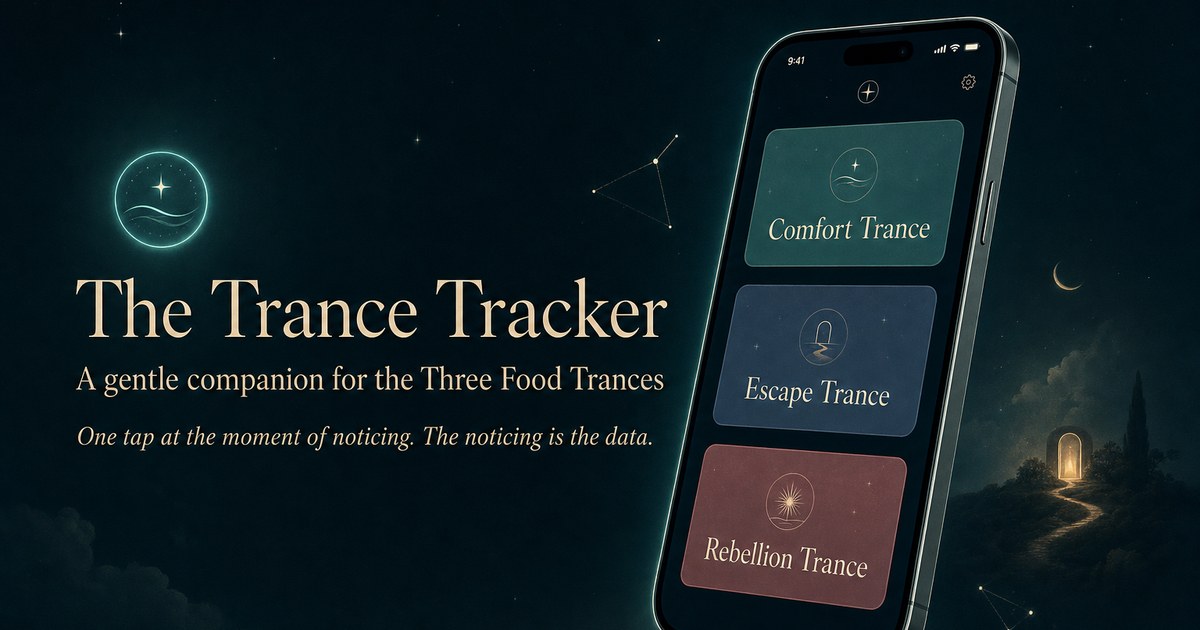
The Trance Tracker — a gentle companion for the three Food Trances
The Trance TrackerSee the app at trancetracker.com →
The honest limit
The evidence behind this model is commercial, not clinical — thousands of people recognized themselves in it and paid for what it built, which is real evidence of a different kind than measured efficacy.

That gap is exactly what Trance Tracker was built to close: a live instrument logging the pattern at the moment it fires. Verification isn't a phase here — it's the method, and it applies to my own thesis first.

Why this matters to a venture builder
One surface behavior × three internal structures × a door for each = products people recognize themselves in

This is the story beneath Case 01: the launch proved the machine sells. This is why it sells.

Bring me the messy problem